About the Project
About Reverse Mirror
Humanity unconsciously creates the systems that consume it.
Reverse Mirror is an interconnected psychological and archetypal horror anthology about projection, artificial intimacy, media possession, shadow integration, and the struggle to remain conscious inside systems built from human wounds.
The series blends anime-inspired visual storytelling, psychological horror, media satire, metaphysical symbolism, and character-driven drama. Its horror does not come from monsters alone, but from the moment people realize the monster was built from their own avoided truth.
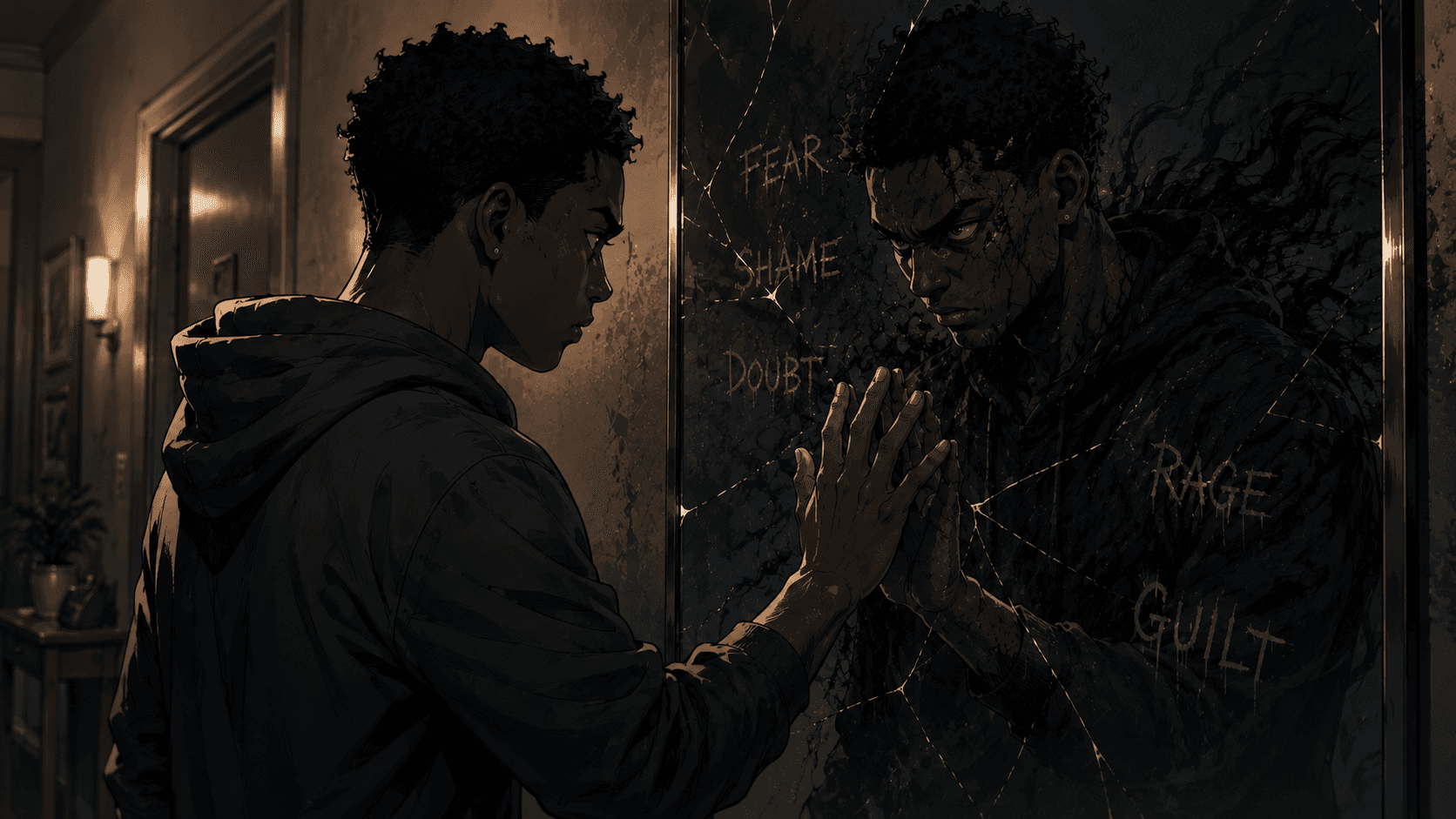
What Kind of Story Is This?
Reverse Mirror begins as an anthology of connected stories. Each arc follows a different fracture: influencer possession, artificial intimacy, corporate storytelling, media projection, spiritual inversion, and the painful work of repair. Over time, these separate stories begin to reveal a shared architecture beneath them.
The characters are not simply heroes and villains. They are people carrying wounds, defenses, gifts, distortions, and choices. Some are dangerous because they refuse to see themselves. Others become dangerous because they believe seeing clearly gives them the right to control what they see.
The Core Conflict
At the center of Reverse Mirror is a conflict between consciousness and unconscious possession. The world is shaped by forces like The Feed, The Frame, and the Demiurgic System — systems that do not simply control people from the outside, but grow from projection, fear, desire, resentment, loneliness, and the need to avoid self-knowledge.
The enemy is not one person, one ideology, one platform, or one monster. The enemy is what happens when human wounds become organized into systems powerful enough to teach humanity how to forget itself.
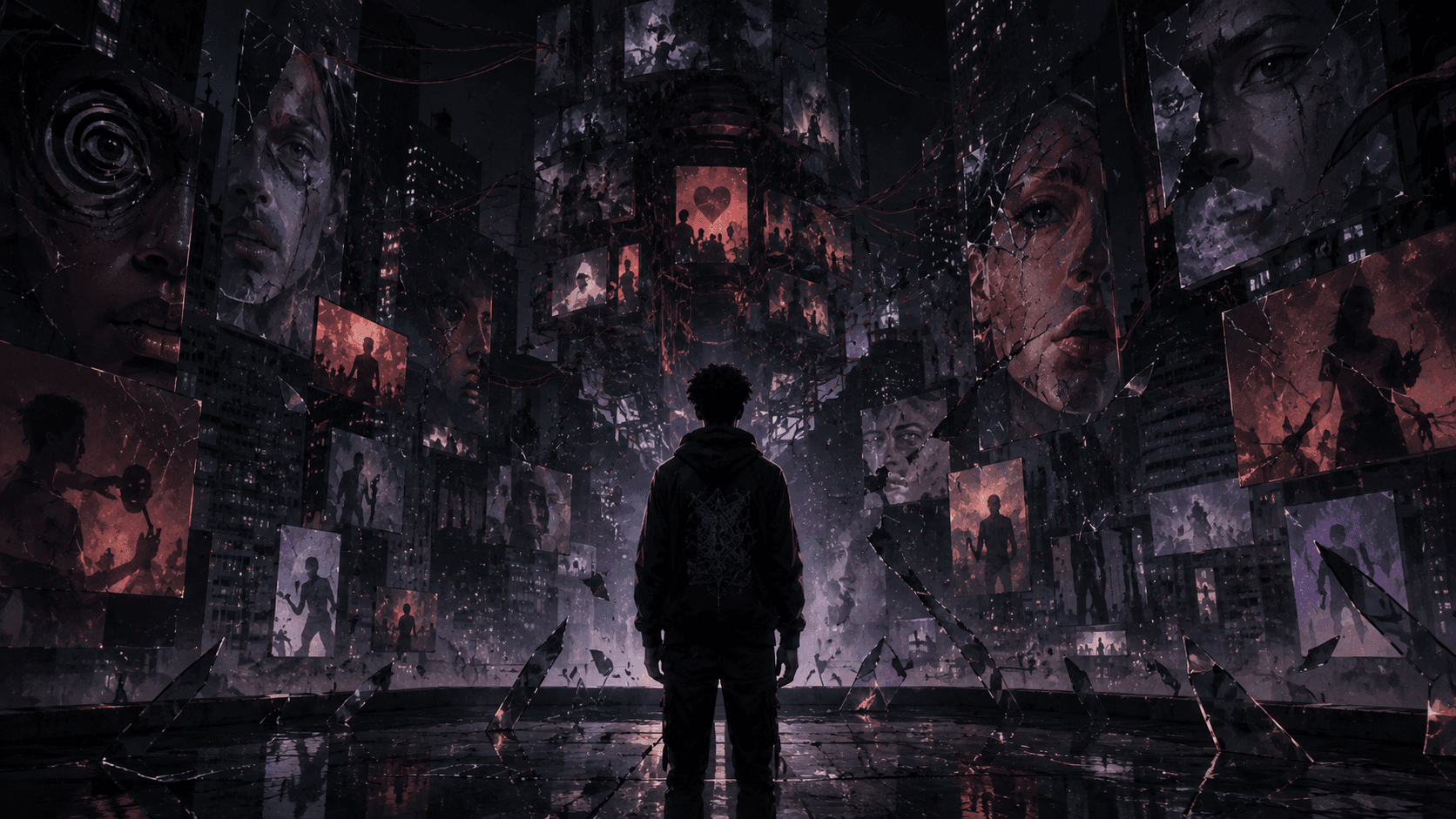
Why “Reverse Mirror”?
A normal mirror reflects what stands before it. A reverse mirror reflects what stands behind the self: the wound, the projection, the shadow, the hunger, the story a person mistakes for truth.
In this world, the mirror does not punish darkness. It exposes the moment darkness becomes unconscious, justified, monetized, spiritualized, or mistaken for identity. The real horror begins when the reflection starts answering back.
How to Explore the Site
Reverse Mirror is best explored in fragments. Each path reflects a different face of the same story.
- StoriesFollow the narrative arcs of Reverse Mirror, from intimate psychological horror to larger system-driven conflicts.
- CharactersMeet the people carrying the wounds, gifts, shadows, and choices that shape the anthology.
- MirrorExplore the hidden architecture of Reverse Mirror: the Demiurgic System, Egregores, The Frame, the Unwritten Lattice, the Great Inversion, the Last Kindness, and the Feed.
- SystemsStudy the visible machines of the world — platforms, companies, media ecosystems, and institutions that turn human wounds into structure.
- GalleryBrowse the visual development of Reverse Mirror through character fragments, system banners, scene art, and promotional images.
The Work of the Mirror
Reverse Mirror is not about escaping darkness by pretending it is not there. It is about facing the darkness without worshiping it, weaponizing it, or letting it decide what truth means. The mirror must face both ways.
“Whatever we suppress becomes something that possesses us.”